
A fun and healthy exercise, cycling is a great hobby and sport to keep us fit and active.
However, over time, cycling can take a toll on the body, and many cyclists experience hand and wrist pain, which can affect riding for pleasure and potentially cycling performance.
Whether this is due to overtraining, poor cycling posture, an incorrect bike fit, or even a fall, if you are suffering from sports hand and wrist injuries, it’s important to speak to a professional as soon as possible.
In this post, we look at some of the most common causes, symptoms, and treatments of wrist pain from cycling.
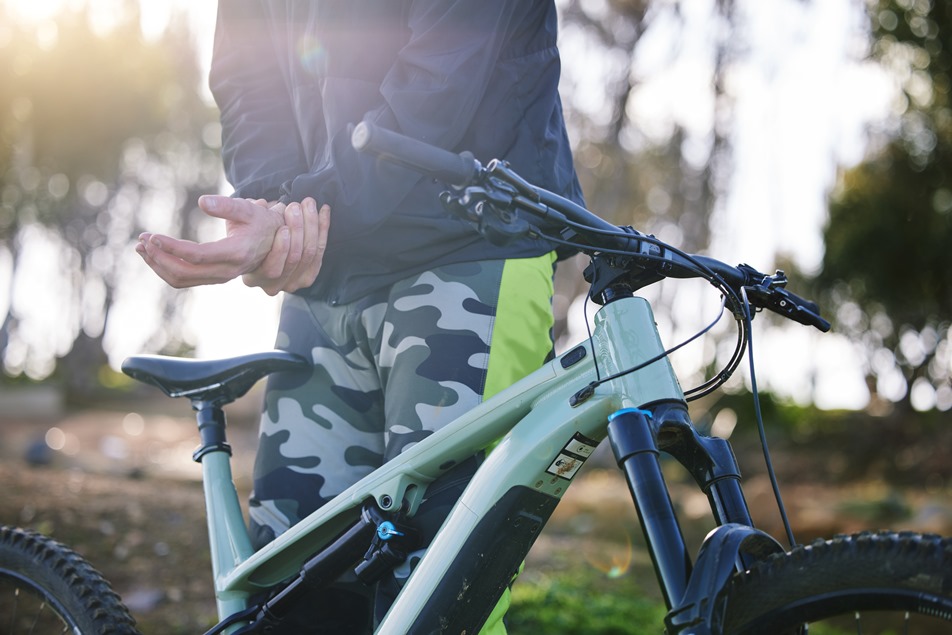
Bicycle wrist pain
Some of the most common causes of cycling wrist pain include:
- Too much pressure on the hands and nerves (caused by a high saddle or low handlebars).
- The wrist is in an extended position for too long.
- Over-inflated tyres or small, thin tyres that cause vibrations that are felt and impact the hands.
All of which can lead to:
Handlebar/Cycling Palsy – also known as ulnar neuropathy, cycling palsy is a form of muscle paralysis in the hand that is caused when the ulnar nerve is compressed. This compression leads to a tingling sensation in the fingers, or in some cases, numbness or weakness and pain in the hand, which impacts both the sensory and motor functions of the hand. This condition often develops over long distances or prolonged cycling.
Hyperextension – hyperextension of the nerve can also occur after cycling for long periods of time or when riding down on drops. It can also develop due to the position of the hands on the handlebars, placing additional pressure and strain on the wrists. Vibrations of the road and terrain can also damage nerves, leading to hyperextension and, in some cases, neuropraxia, which is a disorder of the peripheral nervous system where the cyclist may lose motor or sensory function due to a blockage.
Carpal tunnel syndrome – this can cause severe wrist pain from cycling, as the median nerve (on the palm side) of the wrist is compressed, affecting the flexor tendons of the fingers. Causing inflammation and a numbness or tingling in the thumb, index, middle, or ring finger, and weakness in the hand, carpal tunnel syndrome in the wrist is caused when cyclists place too much pressure when riding on the bar tops or cycling with flat bars.
Symptoms of sports injury wrist
- Numb hands from bike riding
- Tingling sensation, cycling pins and needles in hands
- Weakness in the hands, fingers, and wrist
- Weakened grip
- Cramping in the fingers
- Pain felt in the hand, fingers, and wrist
- Motor weakness.
Diagnosis of wrist pain cycling
A specialist hand and wrist surgeon will be able to diagnose and provide tailored treatment plans designed around your condition.
Diagnosis will consist of a full physical examination, with the potential for CT scans or MRI scans for further detail and analysis, and to determine the exact location of compression.
Depending on the diagnosis, treatment options to consider may include:
- Over-the-counter anti-inflammatory medications.
- Corticosteroid injections (to reduce swelling and ease the pressure on the nerve).
- Splinting to protect and support the wrist and hand.
- Severe cases may require surgery.

Treatment for wrist pain from cycling
Physical therapy – if you have fallen and landed on the palm of your hand and you’re looking for treatment, hand strengthening exercises could be the perfect solution. Also helping to prevent numb hands when bike riding, physical therapy can be tailored to your condition and can include:
- Finger bends – bending the fingers one at a time, holding, and repeating the process.
- Finger squeezes – look to place something between two fingers at a time and squeeze these fingers together. Repeat and move onto the next set of fingers as required.
- Grip strengthening – using a soft hand-sized ball, grip the ball and squeeze it, holding this position for 10 seconds before releasing.
- Movement exercises – wrist bends – bend the wrist forward and backward regularly, bending the wrist back to a neutral position, holding and repeating as prescribed.
Check bike fitting – it’s important to make sure that the bike fitting is correct. This means avoiding putting too much weight through the front of the bike, as well as avoiding a high saddle, low bars, or a stretched cockpit. Ideally, your upper body should be relaxed, and you should avoid an excessive grip. You must also check:
- Bar type or the use of gel pads to protect against road buzz.
- Handlebars are the correct width.
- Avoid a hyperextended position.
- Cushion the pressure points.
- Find a position that works and is comfortable for you.
- Don’t grip too tightly.
Ride in protective gear – protecting your hands can help to prevent cycling sore wrists, especially in the event of a fall, gloves or mitts must be used. This additional padding on the hands and wrists can also help to reduce the pressure on the ulnar nerve.
Regularly move position – regularly moving position, and shifting your arms and rotating your hands, where appropriate, can help to avoid excessive and overuse of the wrists.
If you’re experiencing numb hands when cycling or any form of wrist pain when cycling, it’s essential that you speak to a professional as soon as possible and seek the right treatment for your sports hand injury.
Book an appointment with a member of our team today.