
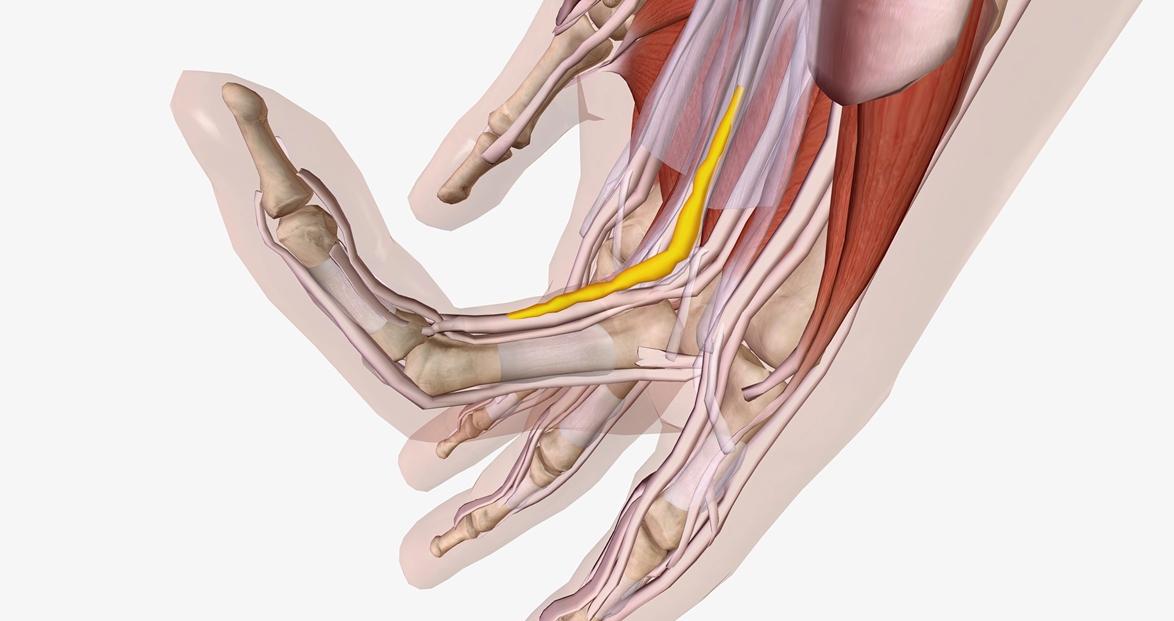
Dupuytren’s contracture is a condition related to the hand and fingers that causes the fingers to bend toward the palm. As the condition worsens, it makes it harder to straighten and therefore carry out everyday activities and tasks.
This condition develops gradually and is not usually painful, but it can limit movement and interfere with daily life.
Early detection of this condition is key, as well as maintaining good hand health, which we look into in more depth throughout this post, alongside surgical options and Dupuytren’s disease treatment in Manchester.
Dupuytren’s Contracture
A relatively common condition, Dupuytren’s disease affects the connective tissue in the hand, forming lumps or nodules which cause/pull the fingers inward where they remain in this permanent position.
Typically affecting older adults and most commonly found in men; Dupuytren’s can however, affect anyone.
Dupuytren’s is caused by a thickening of the tissue within the palm and fingers, leading to nodules developing which gradually begin to cause the finger to curl/bend inwardly, making it impossible for individuals to then straighten the finger properly.
Due to the bending of the fingers, gripping objects becomes more difficult, and it can become challenging to use your hand on a daily basis, for example, wearing gloves, shaking hands, splashing water on your face, hair styling, putting hands in pockets, etc.
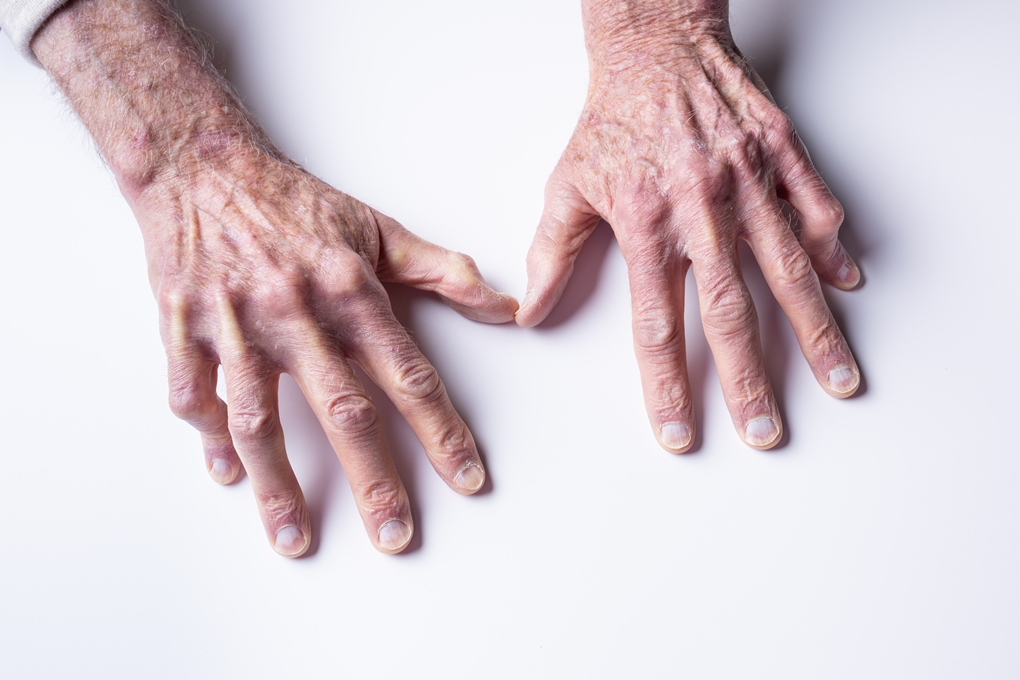
Dupuytren’s early signs
Although there is no cure, it’s important to understand some of the first signs and symptoms as early detection and treatment can be key.
The first early signs include small nodules or lumps in the palm of the hand, appearing, feeling hard, and causing some slight discomfort.
These lumps form thick cords of tissue, that then start the process of pulling the finger toward the palm, causing the finger to become permanently bent in position. This process is what is known as “contracture.”
Unfortunately, once the fingers are bent, you will find that you can’t straighten your finger, and although the situation is not painful, you may experience some tenderness and discomfort.
As the disease progresses, which is usually at a different rate for each individual, the condition can lead to gradual loss of hand function.
Diagnosis
As an experienced hand surgeon in Manchester, our diagnostic process includes a full physical examination of the hand, carrying out a range of tests to assess the full range of motion a patient has.
For example, we may carry out what is known as the “tabletop” test, asking patients to place their hand flat on a solid surface to allow us to assess if the hand and fingers can be straightened and how flat the palm of the hand and fingers can reach.
Referral for surgery is often decided when the rate of progression and diagnosis checks show that the MCP joint (finger to hand) is more than 40% bent, or the PIP joint (from the tip of the finger, this is the second finger joint) is more than 20% bent.
Dupuytren’s Manchester
If your finger can’t straighten and you’re in the early stages of Dupuytren’s, this would be considered mild, where the hand function isn’t significantly affected so no surgical treatment may be required, and exercises along with specific stretches may be offered as an alternative with regular monitoring of the condition.
For example, hand therapy including a splint can help to maximise straightness, with the splint/brace only needing to be worn at night.
Exercises such as:
- Bending and straightening the tip of the finger
- Bending and straightening the middle joint of the finger
- Bending and straightening the top and middle joints of the finger
- Make a fist, hold, and straighten the hand
- Spreading fingers apart and bringing them back together
- Curling fingers toward the palm.
Can help to reduce stiffness and increase overall finger movement.
Massage can also help to keep hands and fingers flexible as well as reduce pain and inflammation.
When the condition begins to affect daily life and everyday activities, then exercises may be required.
In this instance, surgery will remove or release the affected, thickened tissue. However, it’s important to note that even with surgery, Dupuytren’s disease may return because the underlying cause still remains.
Hand Surgeon Manchester
We believe that early recognition of Dupuytren’s disease is key, and we work with you to identify the right course of action for your stage in the condition.
We know that every individual is unique, and we also understand that every condition progresses at varying rates and affects individuals in different ways.
That’s why we carry out detailed diagnosis checks and assessments, allowing us to fully examine your hand and fingers, taking a detailed medical history to get to the root cause of the condition.
Supporting people with a range of hand conditions in Manchester, don’t wait until the pain is too much or you’re unable to carry out everyday activities that you love; book a consultation with a member of our team today.